
Why Drawing Scares Us (And How to Get Over It as a Creative Adult)
I talk to a lot of women who want to draw but feel a surprising amount of fear around it. They want to try sketching in their journals, they admire other people’s faces or florals or little doodles on Instagram, and yet when they sit down with a pen and a blank page, something inside freezes. They say things like, “I’m not an artist”, “I don’t know where to start”, or “What if it looks bad?”
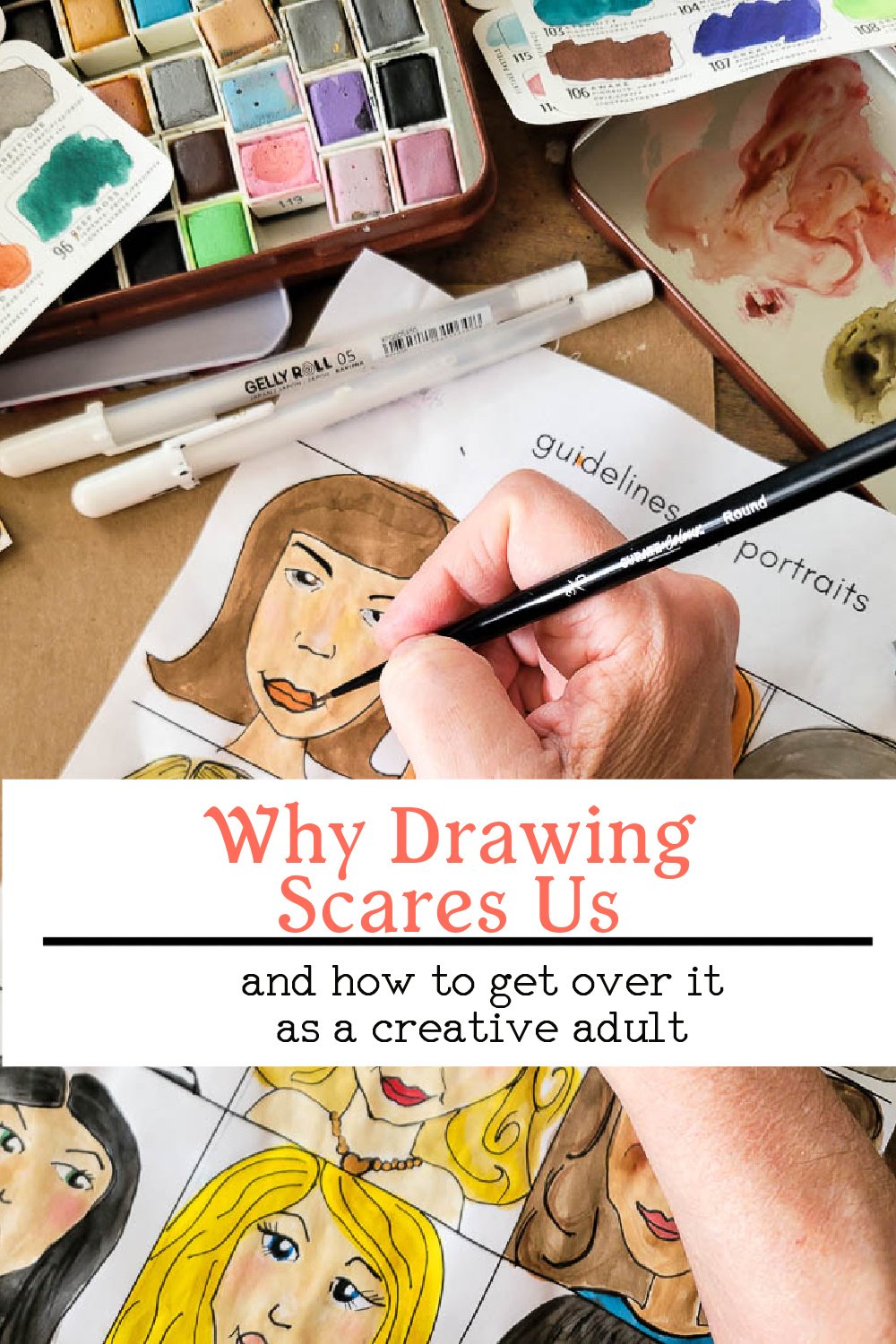
Drawing is such a simple act, yet it stirs up complicated feelings. The older we get, the more pressure we seem to put on putting pencil to paper. And I think it’s worth naming the reasons why drawing feels scary for so many of us, because once you understand the fear, you can work through it.
Here are the real reasons drawing feels intimidating for adults, and what you can do to finally move past them.
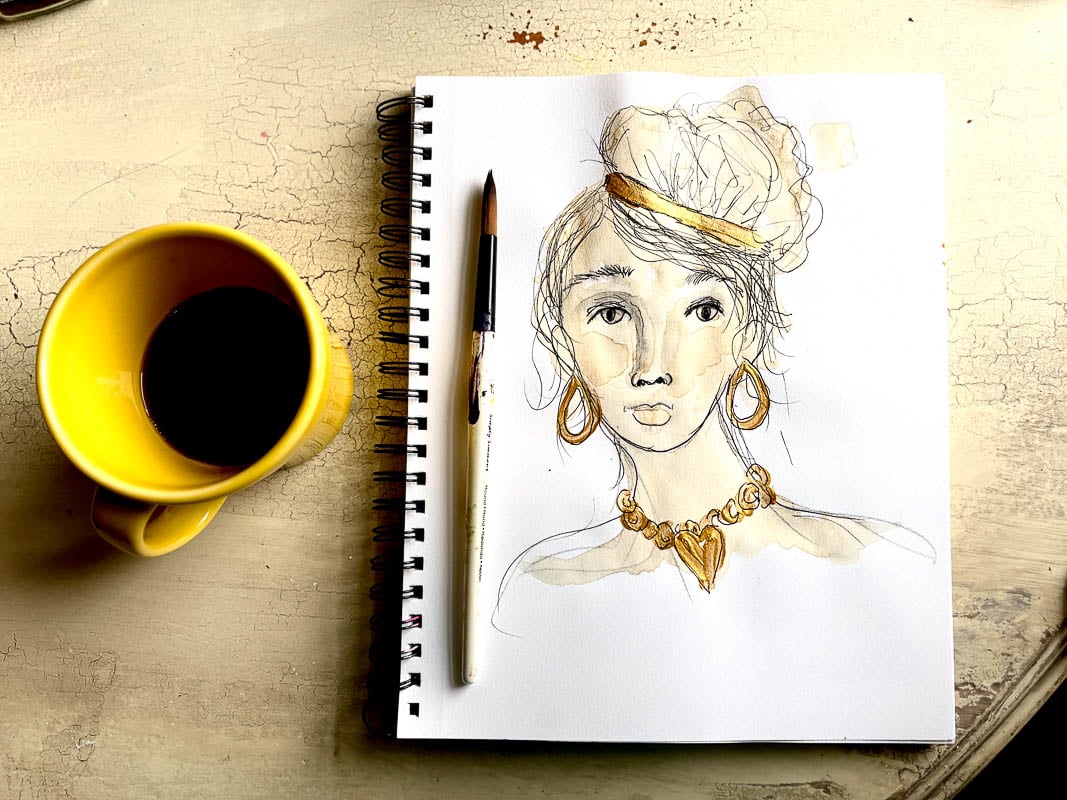
Because as adults, we expect ourselves to be good on the first try
Children don’t care if their drawings look like blobs, potatoes, or sideways people. They create because it feels good. They experiment, scribble, explore and laugh at their own work. Somewhere along the way, adulthood steals that freedom.
We develop an internal rule: if I can’t do it well, I shouldn’t do it at all.
The solution is not forcing yourself to be fearless. It’s giving yourself permission to make something that isn’t good yet. Let your first page be awkward, uneven, or strange. Let it teach you what your hand naturally wants to do. Skill doesn’t come from thinking about drawing, it comes from drawing. Imperfect marks are the doorway to better ones.
Because we compare our beginner marks to someone else’s years of practice
Social media is full of polished sketchbooks, finished portraits, and artists who have spent decades refining their style. It’s easy to look at their work and feel like your own drawings don’t count.
But here’s something most people forget. We never see their ugly pages. We don’t see their early attempts. We don’t see the thousands of lines it took to develop ease.
Comparison is not only unhelpful, it is inaccurate.
A better approach is studying your favorite artists with curiosity instead of discouragement. Notice what you like about their style. Look at the looseness, the shapes, the simplicity, the energy. Those clues help you discover the kind of drawing that feels natural for you to try.
Because drawing asks us to slow down and really look at things
This is a quiet reason why drawing feels uncomfortable. As adults, we rarely stop long enough to truly observe. Drawing requires attention. Noticing the curve of an object, the shape of a shadow, the direction of a line.
This kind of looking is vulnerable. It makes you present. It pulls you out of autopilot. And sometimes being that present feels unfamiliar.
But once you experience it, it becomes one of the most peaceful parts of drawing. Sketching is one of the fastest ways to slow your mind, calm anxiety, and reconnect with your senses. The more you practice noticing, the easier drawing becomes.
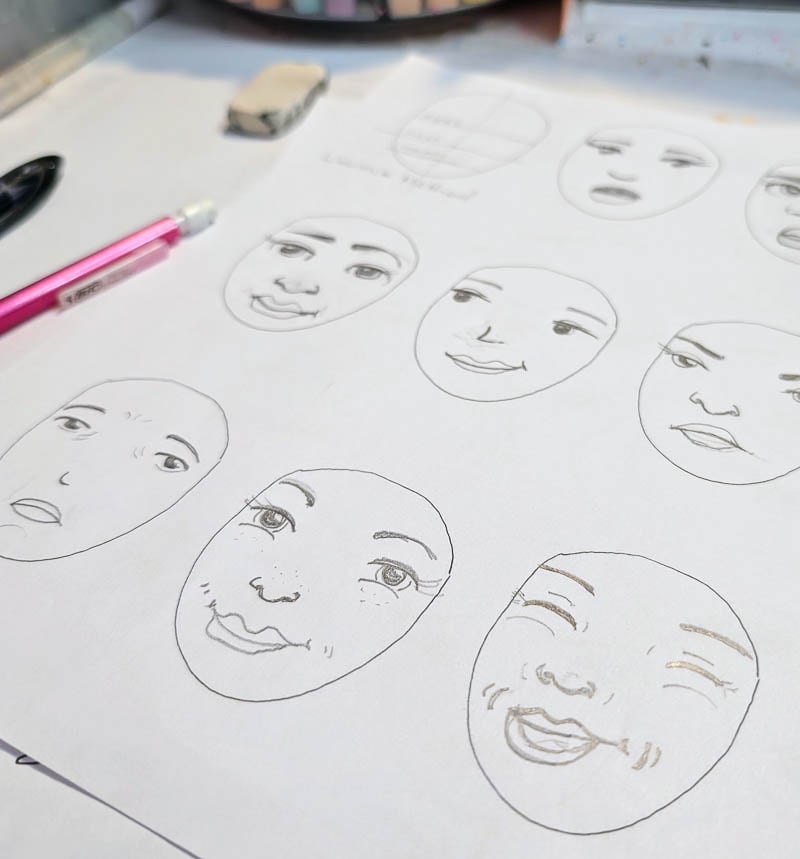
Because we think drawing is a talent, not a skill
Many adults still carry the belief that people are either “good at drawing” or “not artistic.” That mindset alone can keep someone from ever picking up a pencil.
Don’t get me wrong, artistic talent exists. No doubt about it. BUT – you can learn to draw!
Drawing is a skill. Skills can be learned, strengthened, and developed at any age. You do not need natural talent to draw. What you need is curiosity, repetition, and a willingness to be a beginner for a little while.
The secret most people don’t know is this. The style you think you don’t have yet emerges only after making many marks. Your hand develops a visual language through doing, not through wishing.
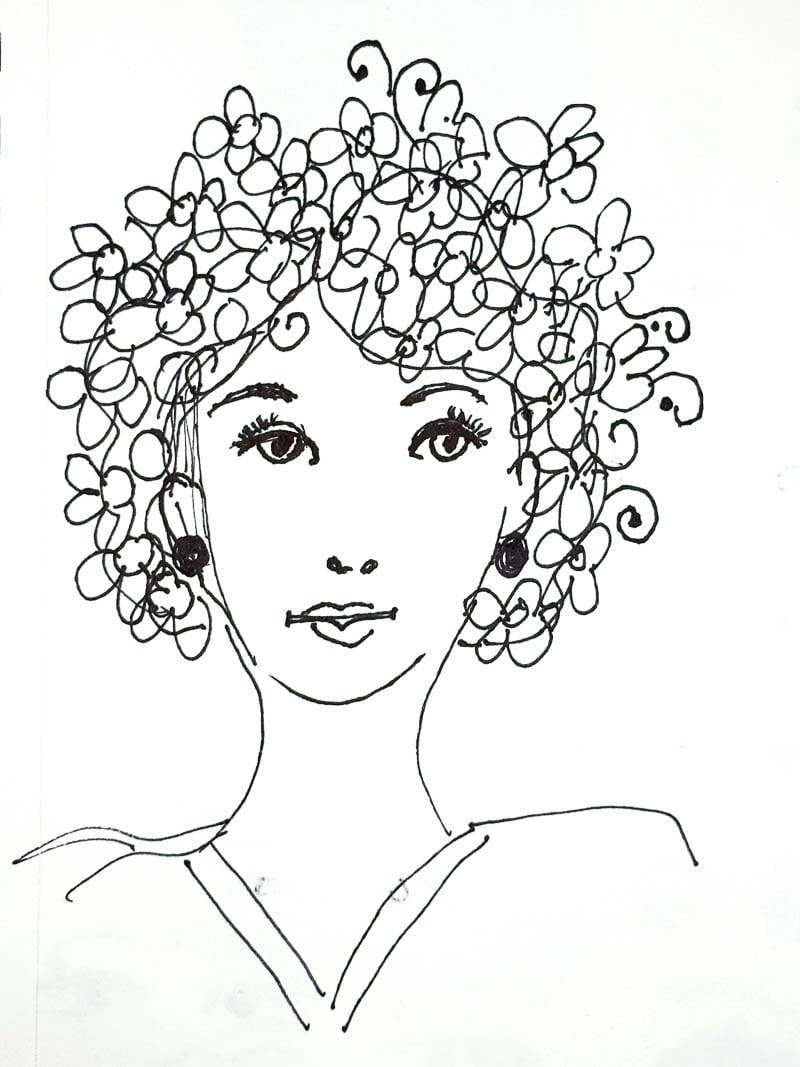
Because drawing reveals more of us than we expect
Drawing feels vulnerable. Your hand, your thoughts, your mood, your confidence, your uncertainty, it all shows up in the lines. That can feel exposing.
It’s having the boldness to put something into the world that others may or may not “like”.
But vulnerability is also where connection, joy, growth, and style begin.
Your drawings are not supposed to look like anyone else’s. They are supposed to look like yours. When you stop trying to hide your personal quirks, you give your art room to breathe and become something meaningful.
The truth is – drawing doesn’t need to be done for anyone except you and God. No approval needed.
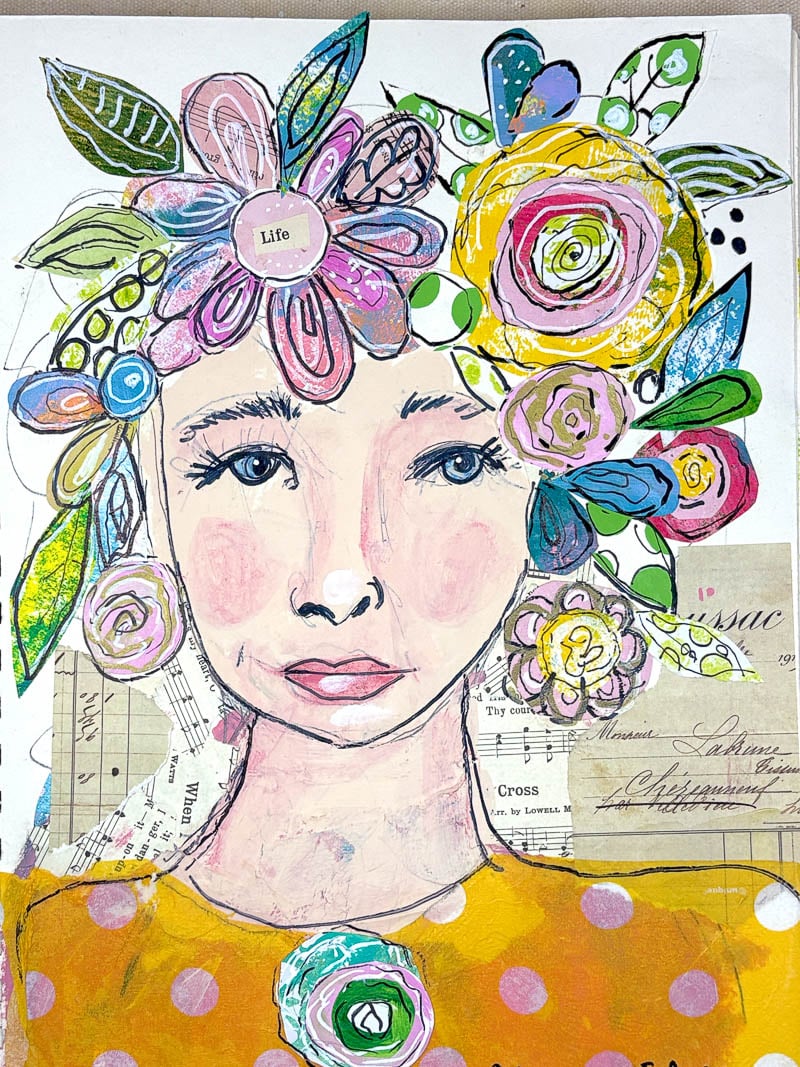
Because we forget that play is allowed
Adults are not great at playing. We multitask, strategize, overthink, and evaluate everything. Drawing thrives on the opposite of that.
Play makes drawing easier. So does limitation. Use only one color. Draw with your non-dominant hand. Give yourself tiny challenges. Treat it like an experiment, not an exam.
The moment drawing feels like play again, the fear loses its grip.
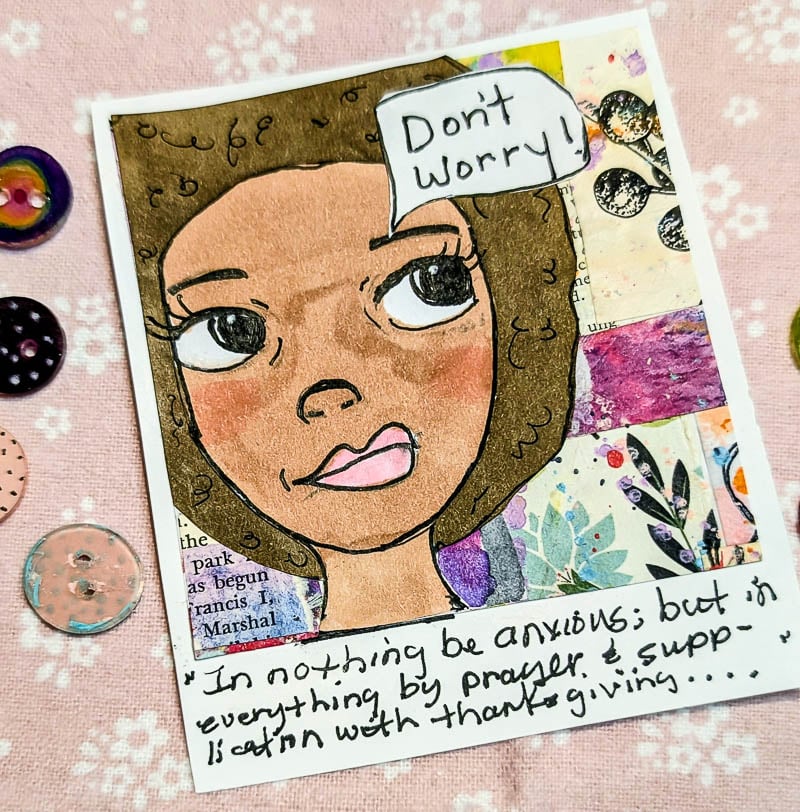
How to finally get over the fear and start drawing
Here are a few simple, practical steps that actually work.
Start small. One small sketch on one small page. Large pages feel like commitment. Small pages feel like freedom.
Limit your tools. Too many supplies cause decision fatigue. Choose one pencil or one pen.
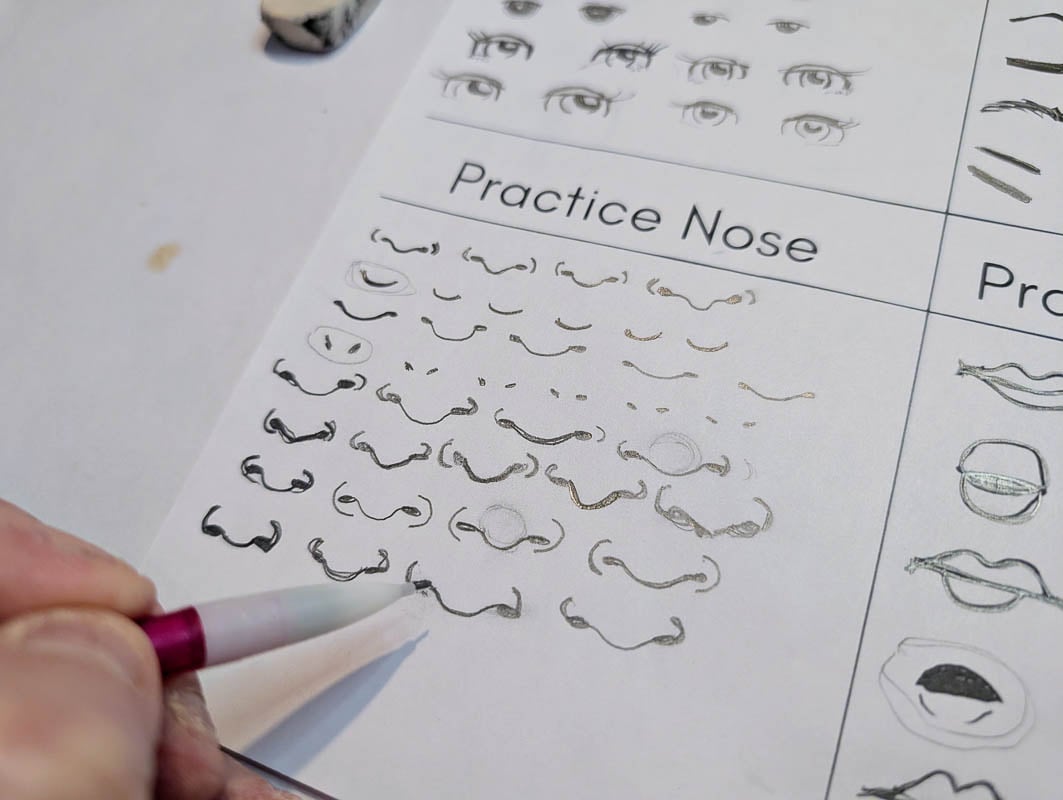
Copy for practice. Not to claim work as your own, but to train your hand. Copy simple shapes, simple florals, or loose faces to understand flow.
Draw what’s in front of you. Your desk, your cup, your Bible, your hand. Real objects build confidence faster than imaginary ones.
Celebrate the ugly pages. Treat them as proof you showed up.
And most importantly, draw more often than you think you need to. It doesn’t have to be every day, but it does need to be regular. That’s how comfort grows.
Drawing becomes less scary the moment your desire to experiment becomes louder than your fear of being bad at it.
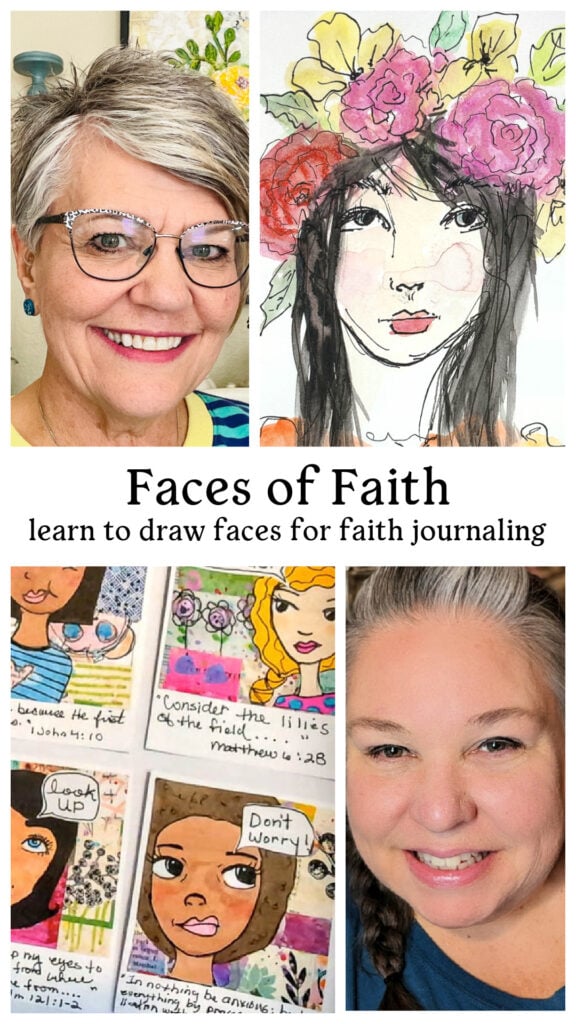
If you want help easing into drawing faces specifically, two wonderful teachers are joining me for a course on loose, expressive faces. I’m excited to learn right alongside you. Sometimes all we need is guidance, permission, and a safe place to begin.

Kim,
excellent blog. I like your idea of making it your own, practice natural not to claim, find your own style and be happy with what you are, compare your work to other works of your ow not someone else. I teach art . I give suggestions but never tell a child they are wrong, their ideas can come from books and models,, but I never force them to draw an object or a picture and try to make it exact. If they start to compare, I ask them to tell what they like about the other and something they like about their own. Sometimes they need to walk away and come back,look at it again. I show them where I have made mistakes and overlook them and concentrate on what I like. Your work is n expression of You . Art is a way of praising God and He only see the beauty and your desire to honor him. I am enjoying your post and your courses. Making them my own.
that makes me so happy! thank you!!
WOW! I SO NEEDED TO HEAR THIS! I took an art class in high school. And the teacher made me feel horrible because of my drawing. I had never drawn. And since then. Just doodles. Thank you for saying what I needed to hear! For being God’s instrument!
that is awful, what a bad teacher! I am so sorry that happened to you! You can do it!