Copying vs. Inspiration: How Other Artists Can Help You Find Your Own Style
One of the things I came home thinking about after my recent museum day was how much looking at other people’s art makes me want to create.
I spent the day at the McNay Art Museum in San Antonio as part of our Linger in Wonder month inside the Creative Faith Club. Our challenge was simply to take ourselves to a museum, slow down, look around and pay attention to what we noticed. And I noticed A LOT.
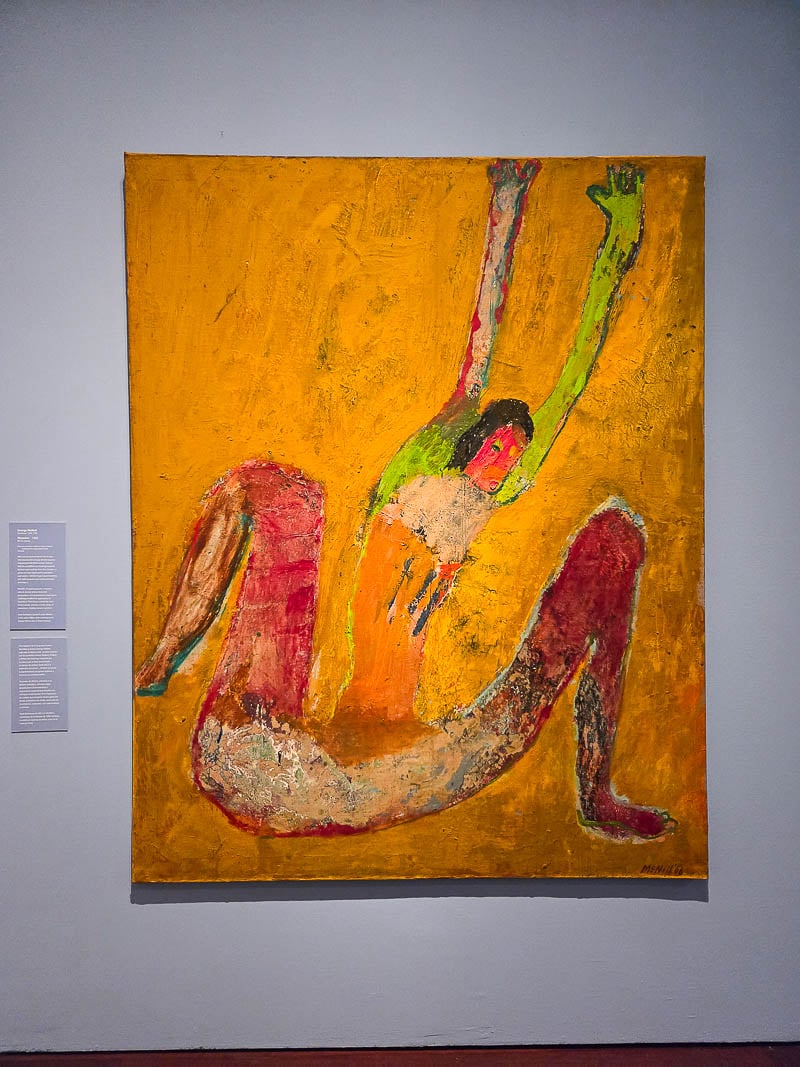
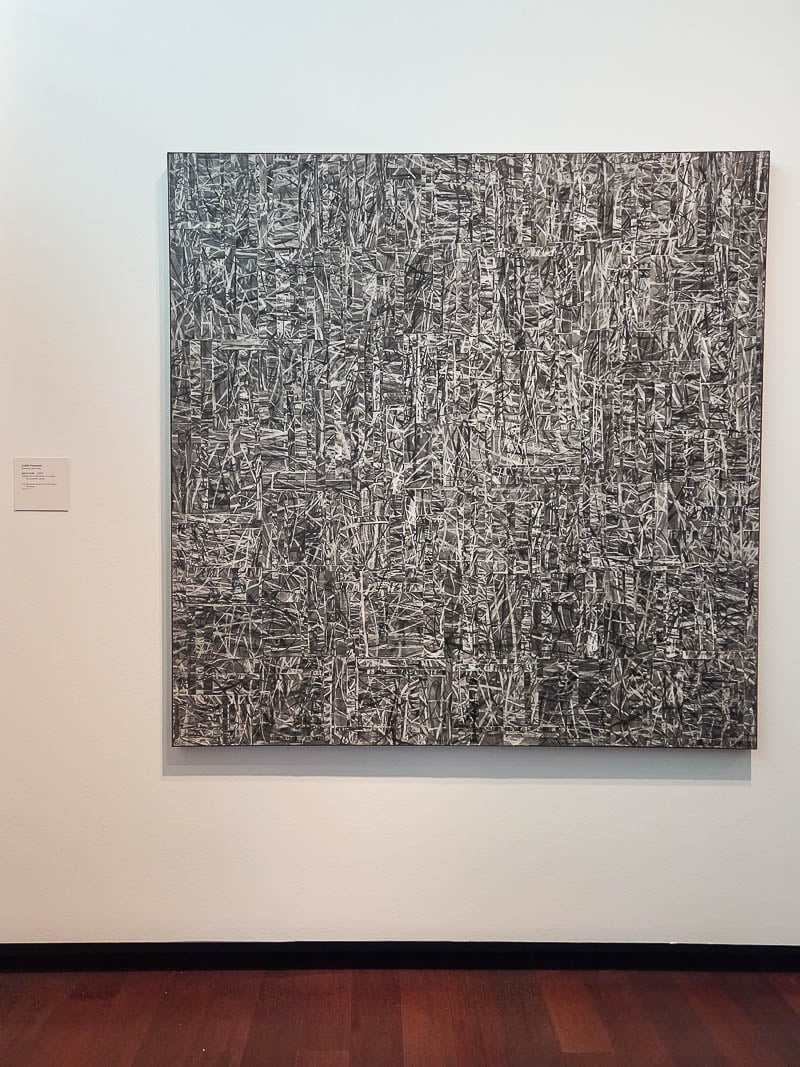
I realized pretty quickly that color palettes draw me in first. I like oils, graphite, high contrast, mixed media and collage. I wanted to get way too close to the paintings so I could see how the artist made the marks, what was underneath the paint and how all those layers came together. Then I wanted to back way up and see how those little marks turned into something completely different from a distance.
Some pieces made me think, I want to try that. Others made me wonder, How in the world did they do that? There were things I would happily hang in my house and plenty of others I could appreciate without having any desire whatsoever to make something like them.
All of that got me thinking about something I hear artists worry about all the time: Am I being inspired by someone else’s art, or am I copying it? And is copying always bad?
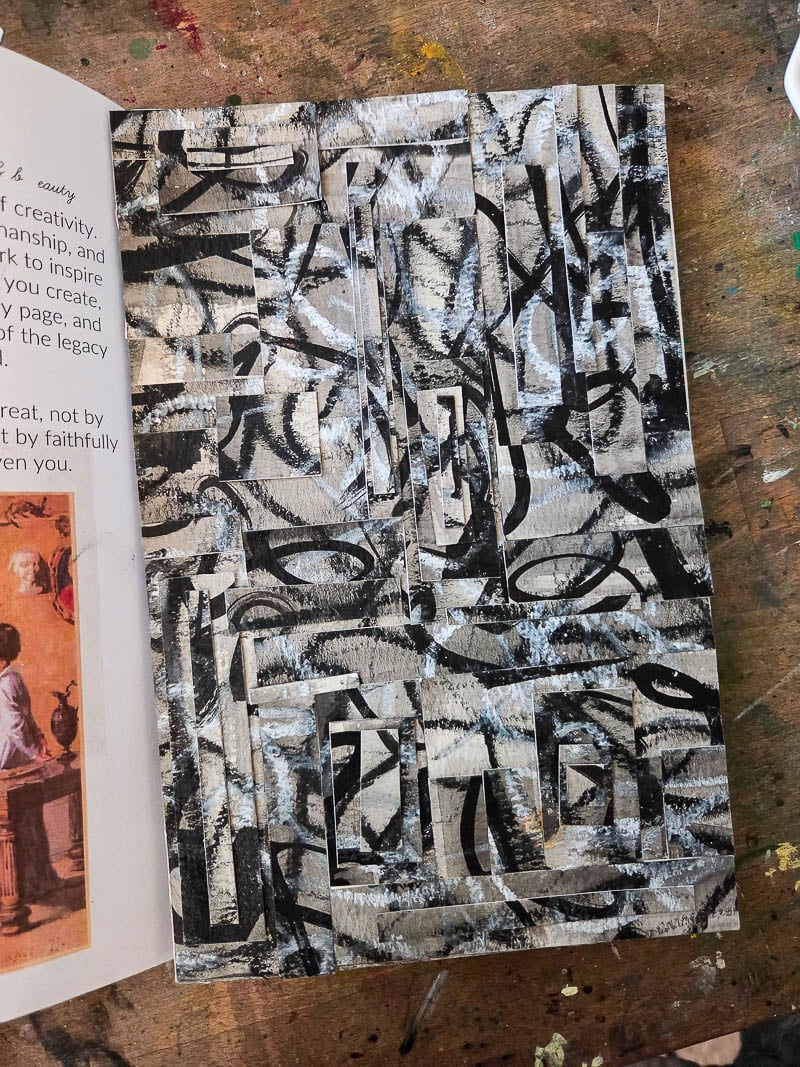
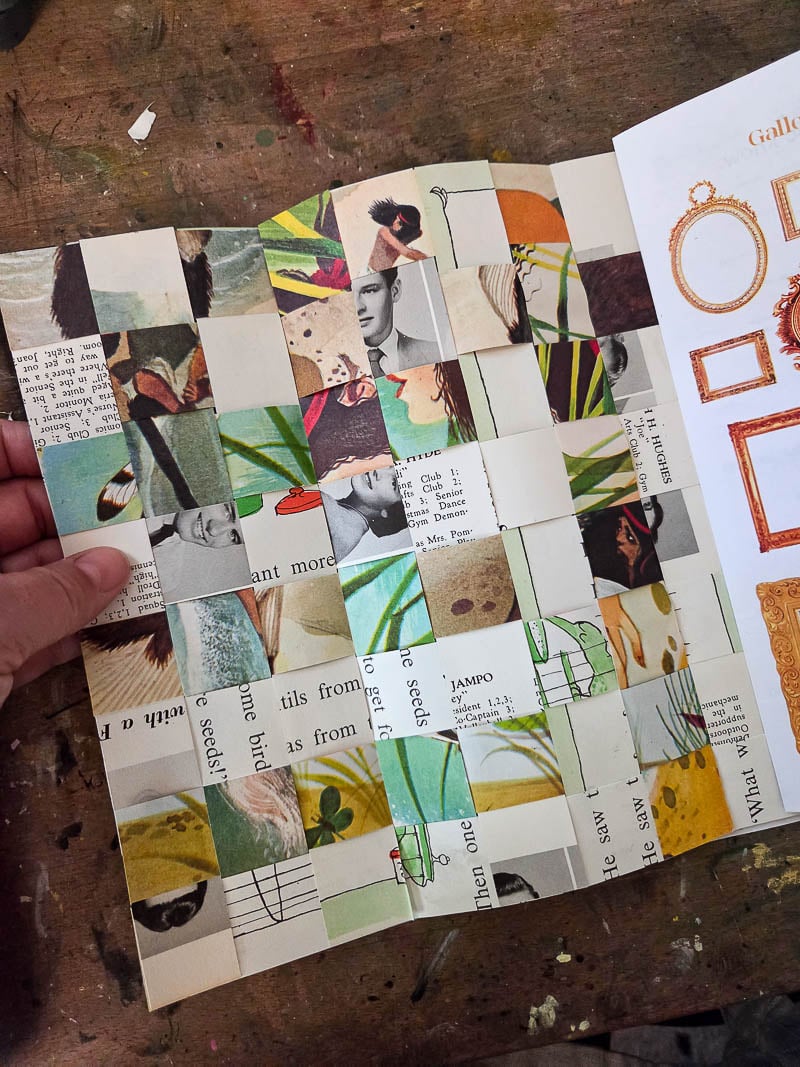
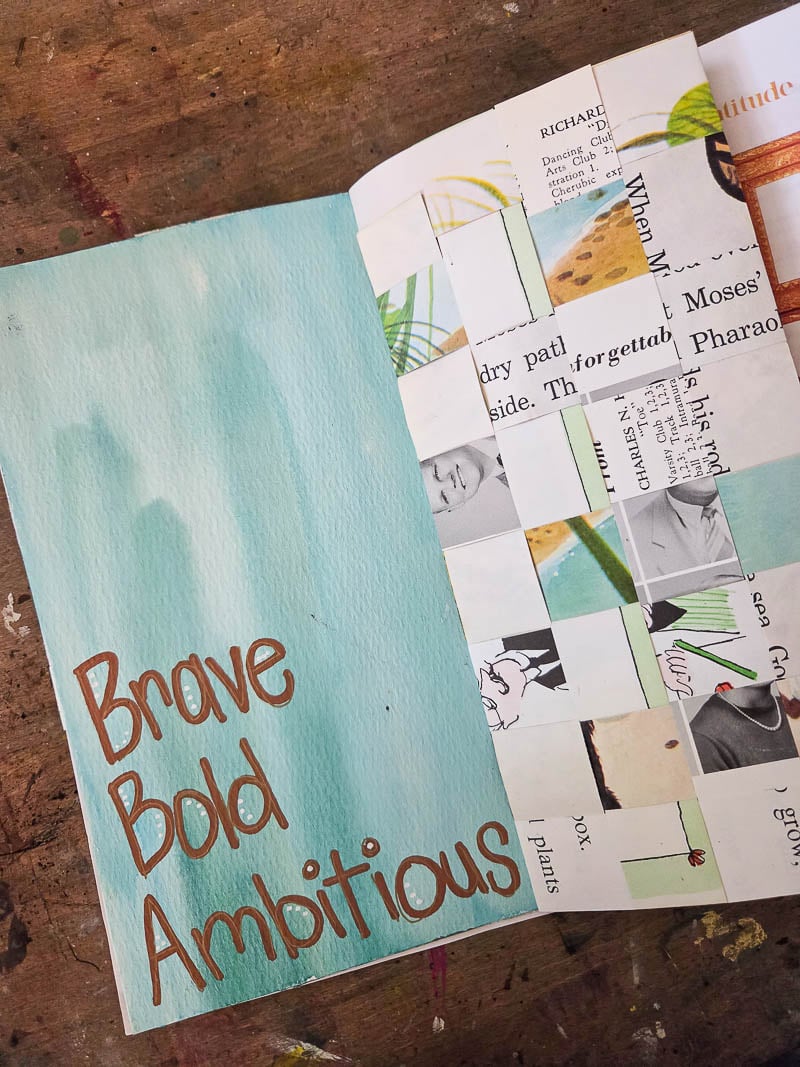
I don’t think it is. In fact, here in this blog post I am sharing a few of my responses to the artwork I was inspired by!
Sometimes Copying Is How We Learn
I actually think recreating artwork can be a GREAT way to learn. Think about almost any other skill we pick up. We learn to cook by following someone else’s recipe. We learn to sew with a pattern. We learn songs written by other people when we’re learning an instrument. We watch someone demonstrate a skill and then try to make our hands do what their hands just did.
Why would learning art be completely different?
If I see a painting and want to understand how the artist created that texture, one of the best ways for me to learn may be to sit down and try to recreate it. I’m studying the colors they used, the order of the layers, the brushstrokes, the composition and the way they created depth. I’m trying to understand the decisions that made the finished piece work.
I’m not claiming their idea as mine. I’m studying it.
And somewhere in that process, I’m learning techniques I can eventually take into my own work.
There Is a BIG Difference Between Learning and Taking
This is where I think we sometimes make the copying conversation more complicated than it needs to be.
There is a big difference between sitting at your art table and recreating someone’s piece because you’re trying to learn from it and copying someone’s work exactly so you can sell it, teach it as your own idea or present it without giving credit to the person who originated it.
Those are not the same thing.
If I follow another artist’s tutorial, I don’t suddenly become the inventor of that technique or project. If I recreate someone’s painting because I love it and want to understand how it was made, I don’t need to pretend I dreamed it up myself.
For me, a few pretty simple guidelines make the distinction much clearer:
- Recreate to learn. Studying and practicing another artist’s work can teach you an enormous amount.
- Give credit. If someone else’s work, lesson or project was the direct inspiration, say so.
- Don’t copy for gain. Selling someone’s design, teaching their project as your own or benefiting from their original idea without credit crosses a very different line.
- Keep going. Don’t stop at the recreation. Take what you learned and experiment with it until you begin making different choices of your own.
That last one may be the most important because the goal isn’t to become really good at making someone else’s art. The goal is to learn the skills that eventually allow your own art to emerge.
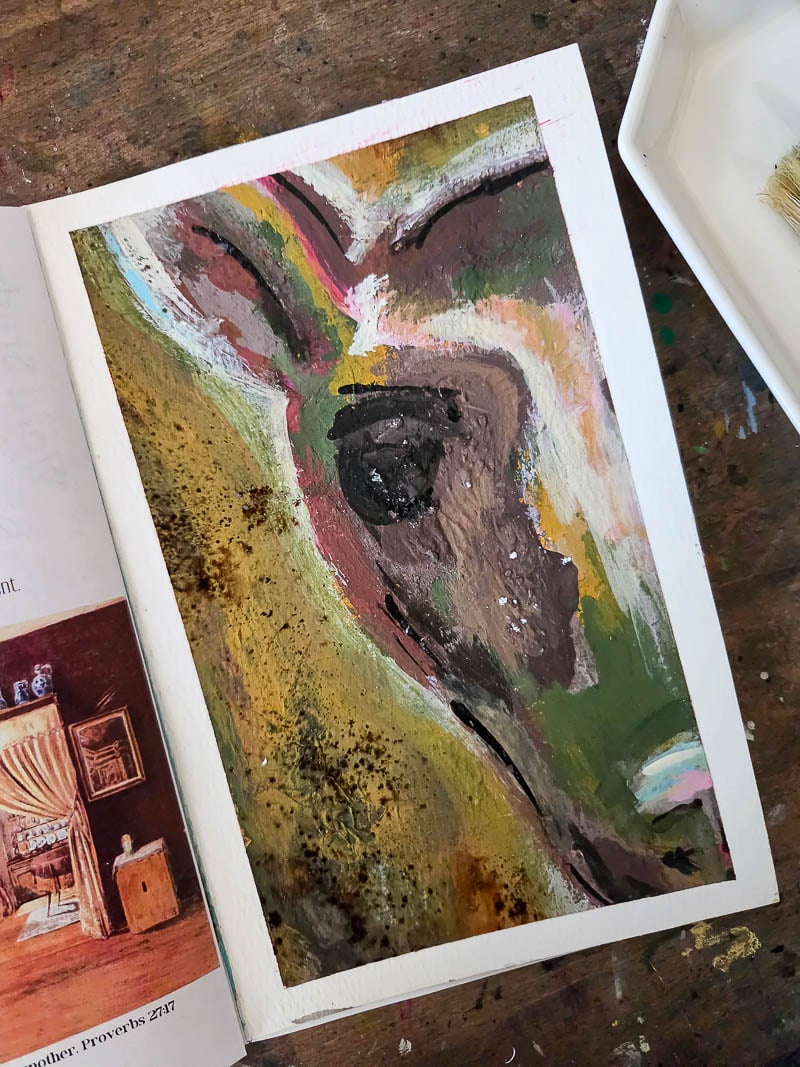
It’s Pretty Hard to Reinvent the Wheel
We also have to acknowledge that a whole lot of art techniques aren’t new. Collage isn’t new. Oil painting isn’t new. Watercolor isn’t new. Artists have been layering paint, shading, stamping, stitching, drawing, making books, creating texture and combining materials for a very long time.
We don’t have to reinvent the wheel every time we sit down at our art table.
Techniques and mediums are tools, and we’re all pulling from a giant toolbox that generations of artists have used before us. What becomes individual is the way each artist eventually combines those tools and expresses themselves through them.
That’s the part we’re really looking for when we talk about finding our “style.”
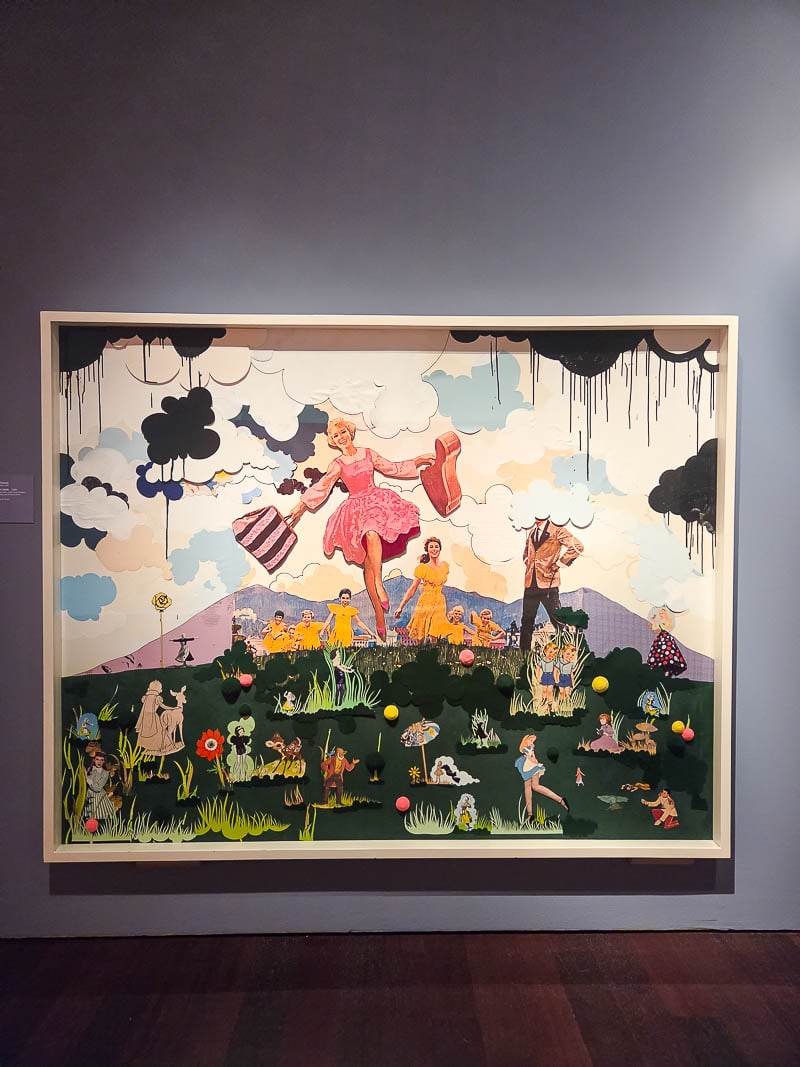
Looking at Other People’s Art Helps You Discover YOUR Preferences
This became really obvious to me at the museum because when you’re surrounded by room after room of completely different art, you begin to see your own preferences more clearly.
Nobody handed me a worksheet and asked me to define my artistic style. I simply started noticing what made me stop. Certain color combinations caught my eye over and over. I wanted to inspect the oils and mixed-media pieces up close. High contrast pulled me across the room. Graphite made me curious.
And I think those reactions are worth paying attention to.
When you’re looking at art, start noticing:
- What makes you walk across the room for a closer look?
- What colors do you keep saving, photographing or noticing?
- What materials and textures make you want to reach out and touch them? (Don’t. Museums frown on that. 😂)
- What makes you think, I want to learn how to do THAT?
- What do you love looking at but have absolutely no desire to create yourself?
- What do you keep coming back to again and again?
Even knowing what you don’t like tells you something.
The more art you see, the more clues you collect about yourself.
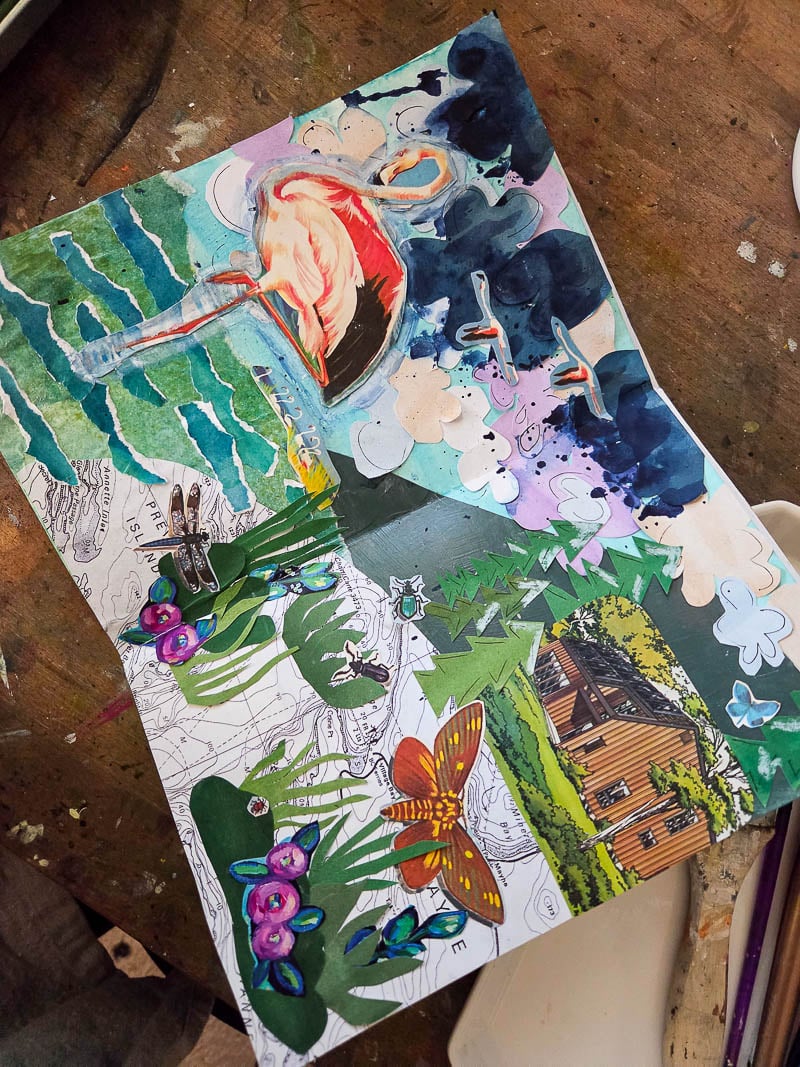
Maybe You Don’t Have to “Find” Your Style
I think we put way too much pressure on ourselves to “find our style,” especially when we’re newer artists. We want to know what our thing is going to be before we’ve tried enough things to actually know what we like or built enough skill to make the choices we want to make.
Maybe your style isn’t something you need to sit down and invent. Maybe it emerges as you learn.
You try watercolor because you love the way one artist uses it. You take a class from someone else and learn collage. Another artist makes you curious about graphite, so you experiment with that. You recreate a project you love and discover that there is one particular part of the process you REALLY enjoy.
Over time, those experiences start piling up. You change the colors. You combine two techniques you learned from two completely different people. You work bigger or smaller. You discover that you like messy edges, heavy paint, strong contrast or that everything you make somehow ends up with a piece of vintage paper glued to it. (Hello.)
Little by little, the techniques you’ve learned from other people start passing through your hands, your preferences, your experiences and your personality. Eventually the work doesn’t look exactly like theirs anymore.
It starts looking like yours.
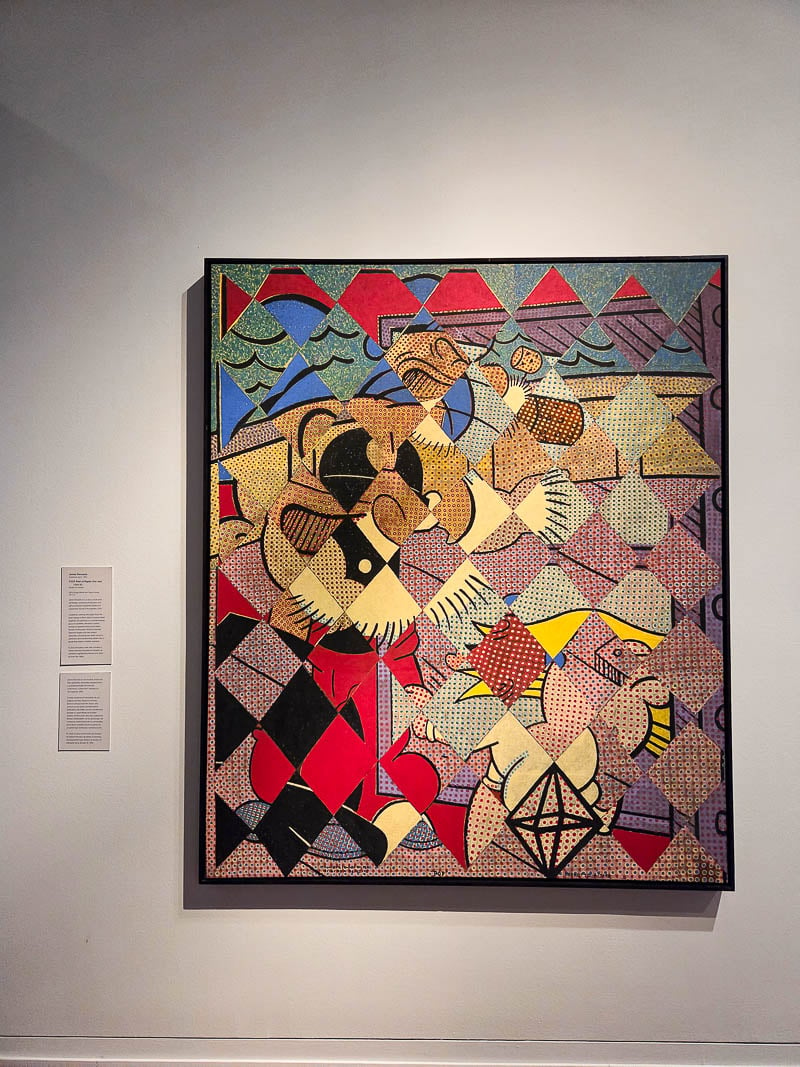
Skill and Confidence Give Your Style Room to Show Up
I think this is another piece we sometimes overlook. When you’re first learning something, so much of your attention is focused on how to do it. You’re thinking about how much water to use, where to put the brush, which glue works, how to shade something or which layer comes next.
Of course your work may look more like the person teaching you at that stage. You’re following directions because you’re learning!
But eventually those basic decisions become more natural. You’re not concentrating quite so hard on the mechanics anymore, and that gives you room to start making different choices. Maybe you use a different color, change the composition, make yours twice as big or combine that technique with something you learned six months ago.
That’s where I think our individual creative voices start getting louder.
The goal of learning from another artist isn’t to become that artist. It’s to learn enough that eventually you don’t need to be.
And Then There Was Monet
One of my absolute favorite discoveries at the McNay drove this point home for me.
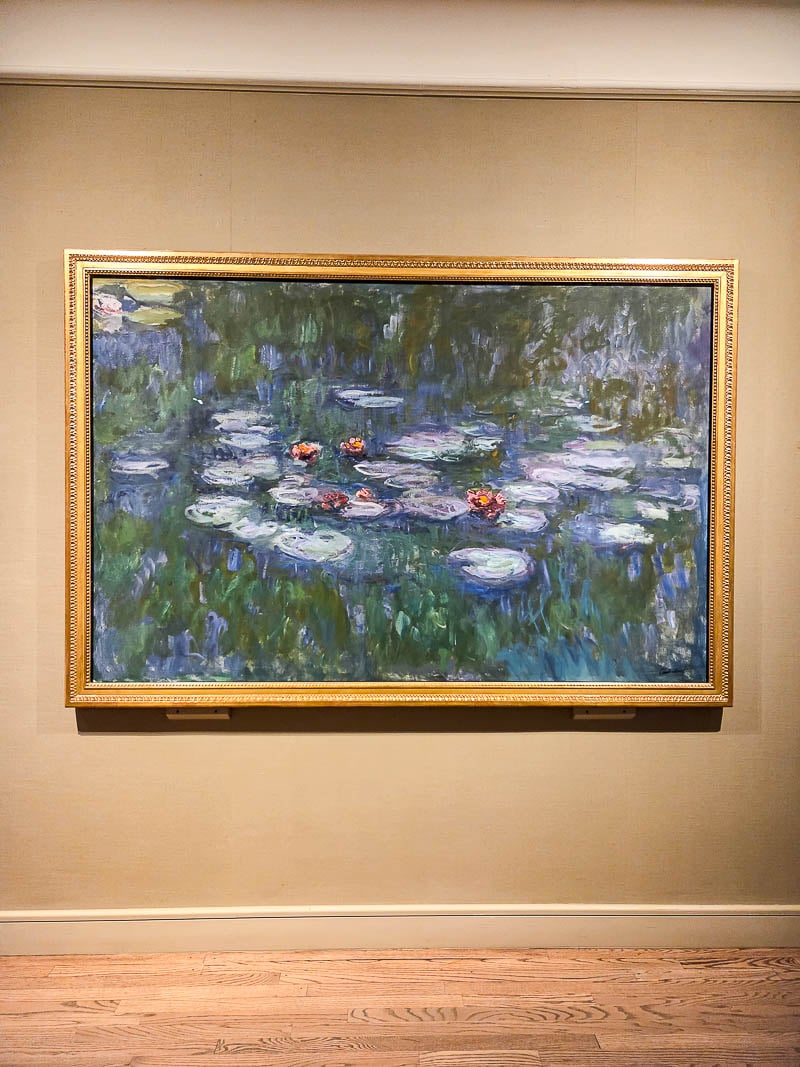
I came across a Monet that was labeled as a preliminary study, and this thing was approximately 5 x 7 FEET.
FEET, people.
This wasn’t a flimsy little sketch Monet knocked out on a scrap of paper before moving on to the important painting. This was a BIG work, a big task and a big investment of time, materials and effort, and it was still part of the preparation.
Monet wasn’t playing around about his planning and practicing!
I stood there thinking about how often we try something once on a little piece of paper, decide it didn’t turn out right and immediately start questioning whether we’re any good at this. Meanwhile, Monet was willing to make a 5 x 7 FOOT preliminary study before moving on to the final work.
Maybe we can give ourselves a second try. Or a twentieth.
And maybe we need to stop treating our studies, experiments, recreations and practice pieces as wasted art time. They’re part of becoming an artist. All of those hours spent learning how paint behaves, figuring out which colors we love, recreating something to understand how it was made and trying techniques that may or may not become part of our own work are moving us forward.
We usually only see an artist’s finished work. We don’t see all the learning that came before it.
Your Influences Don’t Cancel Out Your Originality
This may be the thing I most want newer artists to hear: you are allowed to be influenced by other artists.
You are allowed to study artists you admire, take classes, follow tutorials, recreate projects and practice techniques someone else showed you. You can look closely at a painting, wonder how they made that color and go home and try to figure it out yourself.
Just be honest about where things came from. Give credit where credit is due, and don’t take someone else’s finished idea and sell it, teach it or pass it off as something you invented.
Then KEEP LEARNING.
Because eventually all of those influences begin mixing together with something nobody else has: you.
Your hands, your eye, your favorite colors, your stories, your faith, your experiences, your mistakes, your weird little preferences, the materials you can’t stop buying and the techniques you keep coming back to all become part of the mix.
That’s where your style begins to show itself.
I don’t think you need to force it nearly as much as you need to give it enough experience to emerge.
Go Look at Some Art
So maybe the best thing you can do when you’re feeling creatively stuck isn’t to stare harder at the blank page in front of you. Go look at some art.
Visit a museum or wander through a gallery. Pull art books off the library shelves. Take a class. Study an artist you’ve always loved. Look closely at their work and ask yourself why you like it. Then try some things. Recreate something simply for the experience of learning how it was made, and pay attention to what you discover along the way.
Because the goal isn’t to learn how to make art exactly like someone else.
The goal is to look, learn, practice and experiment long enough that eventually you know how YOU want to make it.
And if Monet needed a 5 x 7 foot practice piece, I think the rest of us can give ourselves a little more grace while we’re figuring it out.